Shower and Bathtub Drain Cleaning
Shower and Bathtub Drain Clog Removal
Get help with slow drainage and standing bathwater. Get a Free Estimate
Shower and Bathtub Drain Cleaning
Get help with slow drainage and standing bathwater. Get a Free Estimate
A shower drain that cannot keep up with running water can leave you standing in a puddle. A bathtub that takes too long to empty can interrupt bathroom routines and make cleaning more difficult. Drain Cleaning Services Eau Claire helps homeowners, renters, and property managers address clogged shower and bathtub drains in Eau Claire and surrounding Wisconsin communities.
Hair is a frequent cause, but it is rarely the only material involved. Soap residue, conditioner, skin oils, and other products can cling to hair and create a dense obstruction. In some cases, the clog is near the drain opening. In others, buildup occurs farther down the piping. We look at how the fixture drains and whether nearby plumbing is affected before choosing a cleaning method.
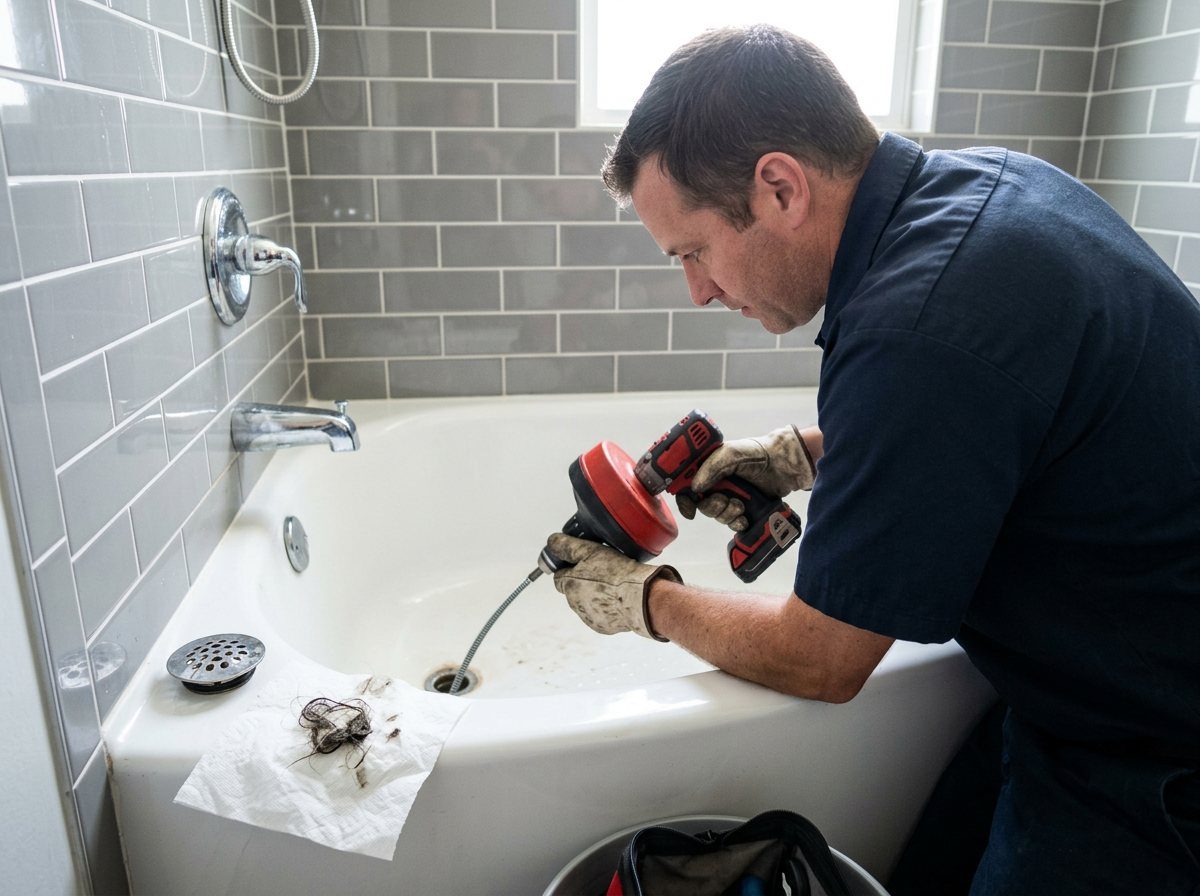
## Hair and Soap Residue Hair can collect around a drain opening, stopper assembly, or inside the trap. As soap and personal care products pass through, the strands catch residue and gradually form a larger mass. This buildup can restrict water flow long before the drain stops completely. A visible blockage near the opening may sometimes be relatively straightforward to remove. Deeper restrictions require attention to the drain configuration and available access. ## Shower and Bathtub Drain Differences Some showers have accessible drain openings that allow a direct approach to clearing buildup. Bathtubs may use stopper assemblies and overflow connections that affect how the drain can be reached. The right access point depends on the fixture's construction. Older bathrooms may have plumbing that has been modified during remodeling. A new tub or shower does not necessarily mean the piping beneath it is new. We consider the installed system rather than relying on the appearance of the fixture. ## When a Slow Shower Suggests a Bigger Problem If the shower fills when a toilet is flushed, the blockage may be in shared drainage piping. The same concern applies when a bathtub backs up while another fixture is being used. Because tubs and showers are often located lower than sinks, they can reveal a downstream restriction. If wastewater appears in the fixture without its own water running, limit other plumbing use and arrange an assessment. ## Keeping Bathroom Drains Clearer A removable hair catcher can help reduce material entering the drain. Cleaning the stopper assembly regularly and keeping solid debris out of the fixture can also help. Avoid combining drain-cleaning chemicals, and report any products already used before professional cleaning begins.
Hair can wrap around internal drain components and collect residue. Removing the buildup from the affected area can improve drainage when no additional restriction remains.
Soap residue, shampoo, conditioner, and body oils can accumulate along the line. These materials may combine with hair to create a persistent blockage.
Some bathtub clogs form around stopper mechanisms and connected fittings. The fixture's design determines how these areas can be accessed.
Water that collects around your feet indicates that the drain is not keeping up with normal flow. The cause may be near the opening or deeper in the drain.
Repeated slow drainage may involve residual buildup, frequent hair accumulation, or a restriction farther into the branch piping. We look at the history of the issue.
We consider hair, soap residue, stopper assemblies, and the differences between tub and shower drainage.
A remodeled bathroom may still have older drain piping. We account for the condition and accessibility of the connected line.
We ask whether toilets or sinks affect the shower or bathtub, since this can indicate a deeper restriction.
We explain practical ways to reduce common bathroom drain buildup after the immediate problem is addressed.
Tell us whether your shower or tub drains slowly, stays full, or backs up when another fixture runs.
Free — no obligations
We ask how long water stands and whether the problem occurs every time the fixture is used.
We consider the drain opening, stopper, trap, and possible shared drainage connections.
A suitable method is selected based on the location of the obstruction and pipe condition.
Where appropriate, we check whether water drains normally after cleaning.
We explain what additional evaluation may help if the drain continues to show signs of restriction.